
Month: November 2026
Your business pays rent. Have you considered buying the property?

You work hard to build your business. Have you considered owning the premises it operates from?
If you're self-employed and your business pays rent for its office, warehouse, workshop, retail space or other commercial premises, it may be worth looking at a different approach.
Rather than renting indefinitely, could purchasing a suitable property help you build long-term wealth while providing premises for your business?
There isn't one answer for everyone, but there are a few options worth exploring.
Option 1: Purchase the property through your SMSF
If you have a self-managed super fund (SMSF), it may be possible for your fund to purchase eligible commercial property and lease it to your business, subject to the relevant superannuation rules and lending requirements.
Potential considerations include:
- Building wealth through property held within your superannuation.
- Having your business lease premises from your SMSF under an appropriate commercial lease.
- Understanding the deposit, borrowing capacity, ongoing costs and cash flow requirements.
- Assessing whether this strategy fits your retirement goals and overall financial position.
Commercial property leased to a business related to the SMSF can be subject to specific rules, so the structure needs careful consideration.
Option 2: Purchase the property outside your SMSF
An alternative is to purchase the property personally or through an appropriate business or investment structure.
Depending on your circumstances, this could provide an opportunity to build equity, potentially benefit from future capital growth and have greater control over the premises your business occupies.
The right ownership structure, tax implications, borrowing arrangements and asset-protection considerations need to be assessed before proceeding.
What if you don't want to buy your current premises?
You don't necessarily need to purchase the property you're renting today.
You could explore other commercial properties that may better suit your business requirements, budget or longer-term investment objectives.
Start by asking the right questions
Before deciding whether to continue renting or investigate ownership, it can be worthwhile to understand:
- What would purchasing a suitable property cost compared with your current rent?
- How much deposit and borrowing capacity might be available?
- Would purchasing personally, through another entity or through an SMSF be appropriate?
- Could the proposed arrangement support your business cash flow and longer-term financial goals?
At YML, we can help you explore the possibilities.
YML Finance can assist with assessing potential commercial property finance options and borrowing requirements. YML Group can help you explore whether the broader financial strategy warrants further consideration, with any personal financial advice provided through the appropriately authorised adviser.
There is no obligation to buy, and purchasing won't necessarily be the right decision for everyone. The first step is simply understanding what may be possible in your situation.
Interested in exploring your options?
How can YML help?
Talk to our YML Finance Team today to see how YML Group can assist you with commercial property finance. For more information, view our website and contact us on (02) 8383 4466 or by using our Contact Us page on our website.
Overseas Staffing: A Smarter Way to Build Your Workforce
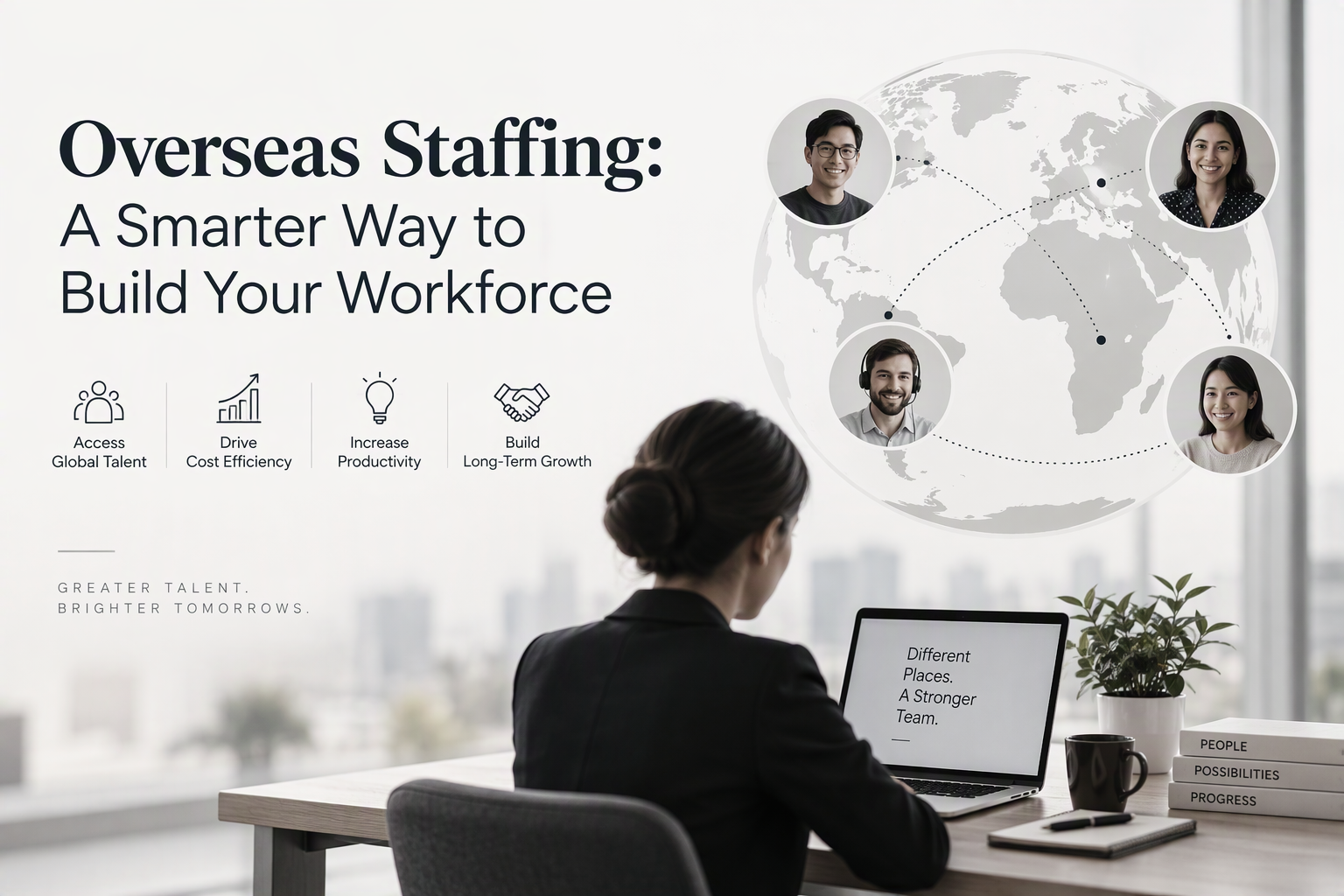
Running a successful business means you’re constantly balancing people, managing productivity and aiming for profitability, so YML Group offers overseas staffing solutions to help Australian businesses.
Reducing operational costs whilst efficiently scaling your business and without compromising your existing internal resources, quality or control is possible by looking beyond the traditional staffing model.
Our approach starts with understanding your business, identifying gaps in staffing and exploring solutions that align with your productivity objectives. We ensure newly recruited overseas staff work as part of your business’s team, managed and supported by YML Group’s Australian systems and infrastructure with full accountability.
Benefits for your Business:
Overcome local skills shortages
YML Group offers skilled offshore professionals to fill important roles without relying solely on the Australian labour market. Finding qualified, reliable employees locally can be a challenge, time-consuming and expensive at current labour market rates.
Overseas recruitment takes the pressure off, fills your staffing gaps and frees up your in-house teams to focus on higher-value work tasks.
Scale your business faster
Expanding your workforce can require a significant investment in recruitment costs, salaries and additional infrastructure. At generally less expense, you can delegate suitable routine, repetitive tasks to overseas staff, thereby improving workflow capacity to target growth opportunities.
Overseas staffing offers a flexible way of increasing your in-house team’s capacity to respond to demand as your business grows.
Extend your business hours
Your business does not need to stop when your in-house Australian workforce finishes for the day. With overseas staff working in different time zones, you may be able to extend your operations and keep important work tasks moving outside your usual business hours.
Overseas administration staff, for example, can continue with routine processing, providing a handover of ongoing procedures to your local team at the start of each day. This would support faster turnaround times of back-of-house administrative duties.
Reduce cost, increase profit
Depending on the role and the service arrangement, overseas staffing can provide a more cost-effective way to access skills to support your business’s needs. Local hires require a company to invest in recruitment, onboarding, superannuation, leave entitlements, equipment and office space.
Overseas staffing offers potential savings to your business, giving your business a clearer focus on its financial goals.
Next Steps
Overseas staffing isn’t simply about reducing costs; it’s about finding the right balance of skills and capacity to resource your business most efficiently. With the right people and processes in place, you can address skills shortages, increase productivity, extend your operations and scale up your business.
YML Group’s overseas staffing solutions can help you explore opportunities to not only build but also strengthen your workforce. Reach out to YML Group and let us support your growth business strategy.
How can YML help?
Talk to our YML Business Services Team today to see how YML Group can assist you with overseas staffing solutions. For more information, view our website and contact us on (02) 8383 4455 or by using our Contact Us page on our website.
Discretionary Trust Reform: 30% Minimum Tax from 1 July 2028
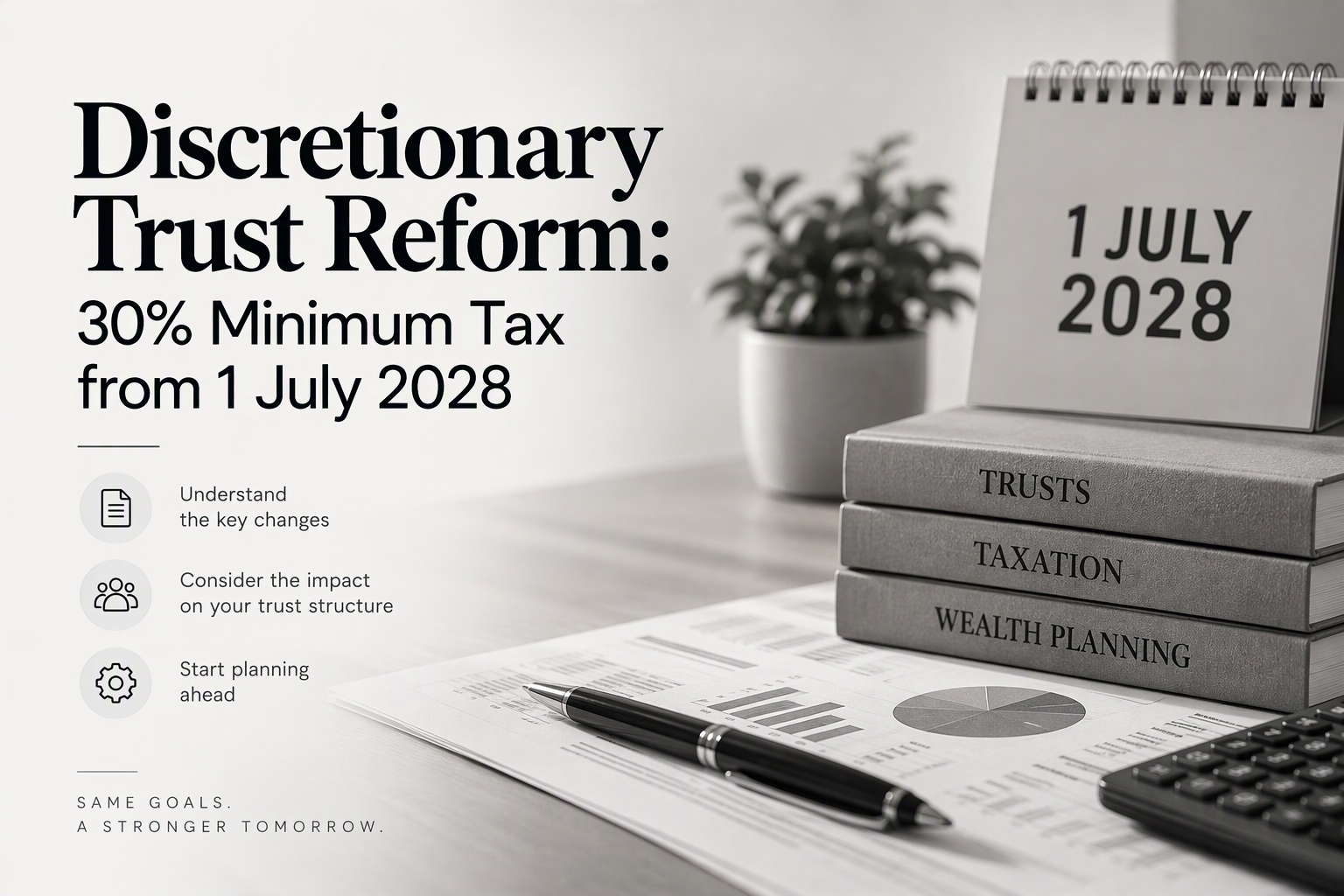
A new Australian Government tax of 30% on discretionary trusts will commence from 1 July 2028. Discretionary trust structures will continue to serve legitimate purposes, but the proposed reform mean it is time to review whether your current trust deed remains suitable.
For many Australian families and business owners, discretionary trusts have been an important part of their tax planning, asset protection and succession strategies. This major taxation change could significantly affect how family-run businesses, investors and high-income earners manage their tax strategy.
Potential Changes to Discretionary Trusts
Currently, discretionary trusts can distribute income among eligible beneficiaries, allowing families and business owners to potentially reduce their tax liability by taking advantage of different individual taxation rates.
Under the proposed reforms, affected trusts would generally pay a minimum tax of 30% on relevant taxable income. Individual beneficiaries may receive a non-refundable tax offset for their share of the minimum tax paid, while corporate beneficiaries would not receive the same offset.
Certain trust types and categories of income would be excluded, subject to the detailed rules under the legislation. Therefore, it will be important to assess how your trust distributes income and whether your existing trust deed would continue to be right for you and your beneficiaries under the incoming legislation.
The reform could particularly affect:
- Family businesses
- Families relying on income splitting
- Investors and property owners
- Trusts with corporate beneficiaries
Certain trusts and categories of income proposed to be excluded, subject to eligibility requirements, include:
- Testamentary trusts
- Fixed trusts
- Superannuation funds
- Charitable trusts
- Deceased estates
- Trusts earning primary production income
Changes to taxation do not automatically mean that a trust should be dismantled. Businesses and individual taxpayers who choose to restructure out of their discretionary trust arrangements, though, will be permitted to access expanded rollover relief for three years from 1 July 2027, pending final rollover relief application eligibility.
Next Steps
Although the proposed commencement date is 1 July 2028, early planning is important. Depending on your specific circumstances, you might need to review your trust deed, beneficiary distribution and succession planning.
Restructuring should not be undertaken without consideration for asset protection, capital gains tax (CGT), stamp duty and without assessing whether restructuring is appropriate for your family, investment or business strategy.
YML Group’s Chartered Accountants can help you navigate the proposed reform and evaluate options available to you. Our approach is focussed on proactively reviewing the proposed reform in relation to your future tax planning
How can YML help?
Talk to our YML Chartered Accountants today to see how YML Group can assist you with your discretionary trust. For more information, view our website and contact us on (02) 8383 4400 or by using our Contact Us page on our website.

